
Choose a supply format
Distinguish unlabeled units, bulk dry materials and component kits.
Specify the cosmetic intermediate, packaging state, artwork boundary and batch records your team needs to take the next step.
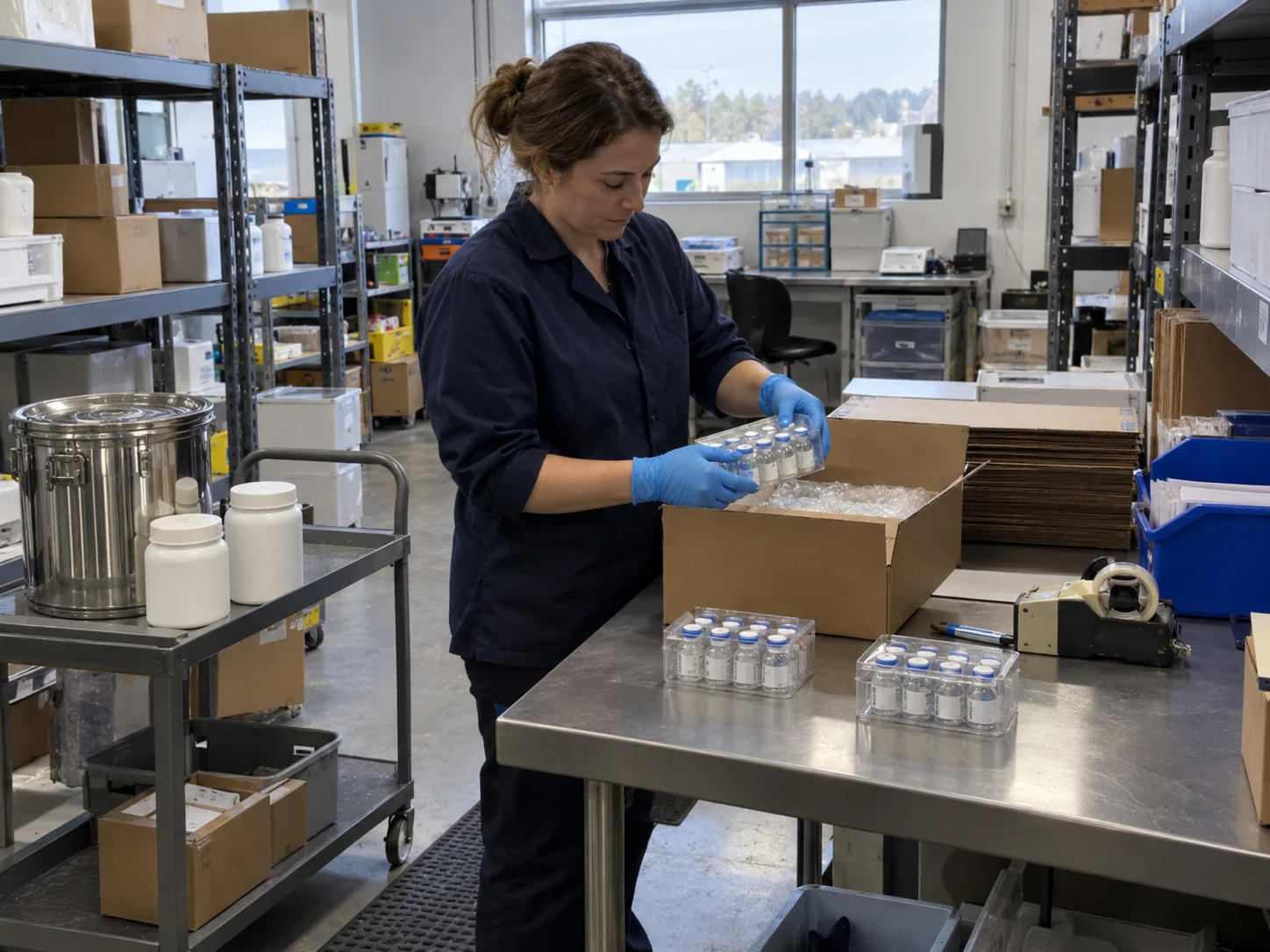
Distinguish unlabeled units, bulk dry materials and component kits.
Agree who receives the material, applies artwork and reviews the evidence.
Set the fixed, variable and market-specific fields before a proof is approved.
Check that the report, physical label and purchase line identify the same lot.
Peptide OEM Works is a business website of Guangzhou Celsentra Biotechnology Co., Ltd.
No. 76 Fucong Road, Conghua District, Guangzhou, Guangdong, ChinaWorkshop area and equipment count are company-reported figures. Confirm the equipment and schedule for your specific project.
A semi-finished order is easier to review when every part of the physical delivery and its documentation has a named owner.
Describe what is in the delivered unit and what is left for the next party.
Separate approved artwork from printed batch and date fields.
Compare the trade unit, carton and shipping record.
Identify which evidence the receiving team will review.
Original company footage of glass vials moving through a rotary handling table.
Company and workshopSearch the Celsentra COA library by product or lot. Compare the report identifier with the physical pack and the material you requested.
No. Branding and batch identification are different needs; agree how identity is maintained.
It refers to an explicitly defined delivery state with subsequent work assigned to a responsible party.
Describe your packaging and workflow so the proposed interface can be reviewed.
Confirm which features it represents and document any differences.
Treat images as references until the exact offered configuration is confirmed.
The project scope should name the responsible approver and the applicable information set.
Reference the approved specification and review current material, batch and packaging conditions.
Provide shipment and lot identifiers, the affected requirement and supporting observations.
No. Visually similar units need an agreed identification system linked to their product and lot records.
Not necessarily. Receipt, quantity checks and technical review can be separate decisions with different responsibilities.
No. Physical structure and material quantity are different attributes. Use the agreed specification and relevant evidence.
No. Identify the delivered state and the remaining activities, including the brand’s labeling and finished-product responsibilities.
Include the supplied state, the intended topical cosmetic format, who completes the packing or artwork, and the handover documents you need.